
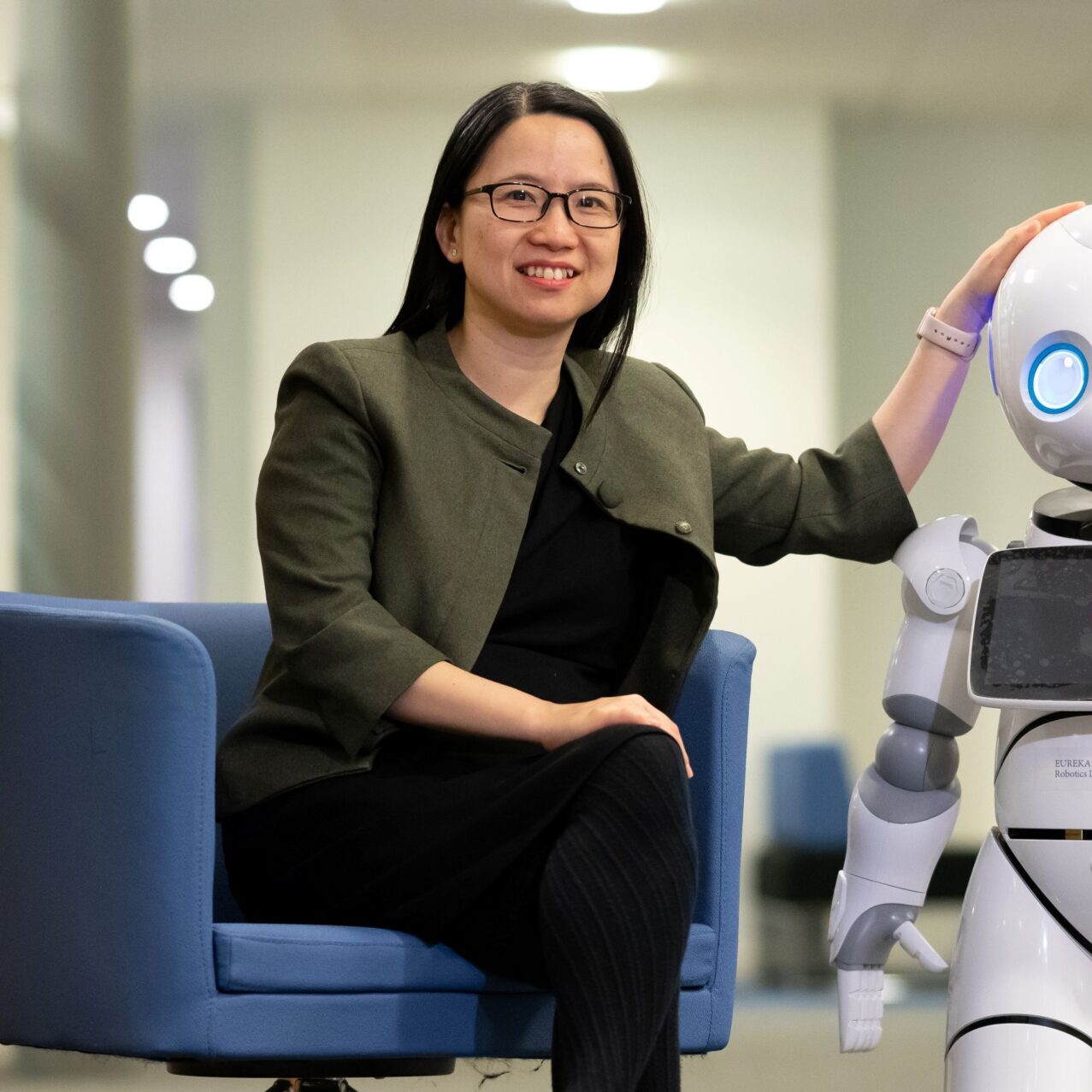
When Professor Esyin Chew speaks about robots, she does not begin with circuits, algorithms or machines. She begins with people.
Based in Cardiff, Wales, Prof. Esyin is the Director of the EUREKA Robotics Centre at Cardiff Metropolitan University, one of the United Kingdom (UK)’s leading research centres dedicated to social and service humanoid robotics and artificial intelligence (AI). She has lived in Wales for nearly two decades, built a global research centre recognised by the UK Government and raised two children along the way. Yet at the heart of her work remains a deeply personal motivation rooted in home, family and care.
Read on to find out how the Kluang-born professor transformed her passion for robotics into real-world solutions impacting healthcare around the world, including her home country.
Converting a Personal Setback into Purpose
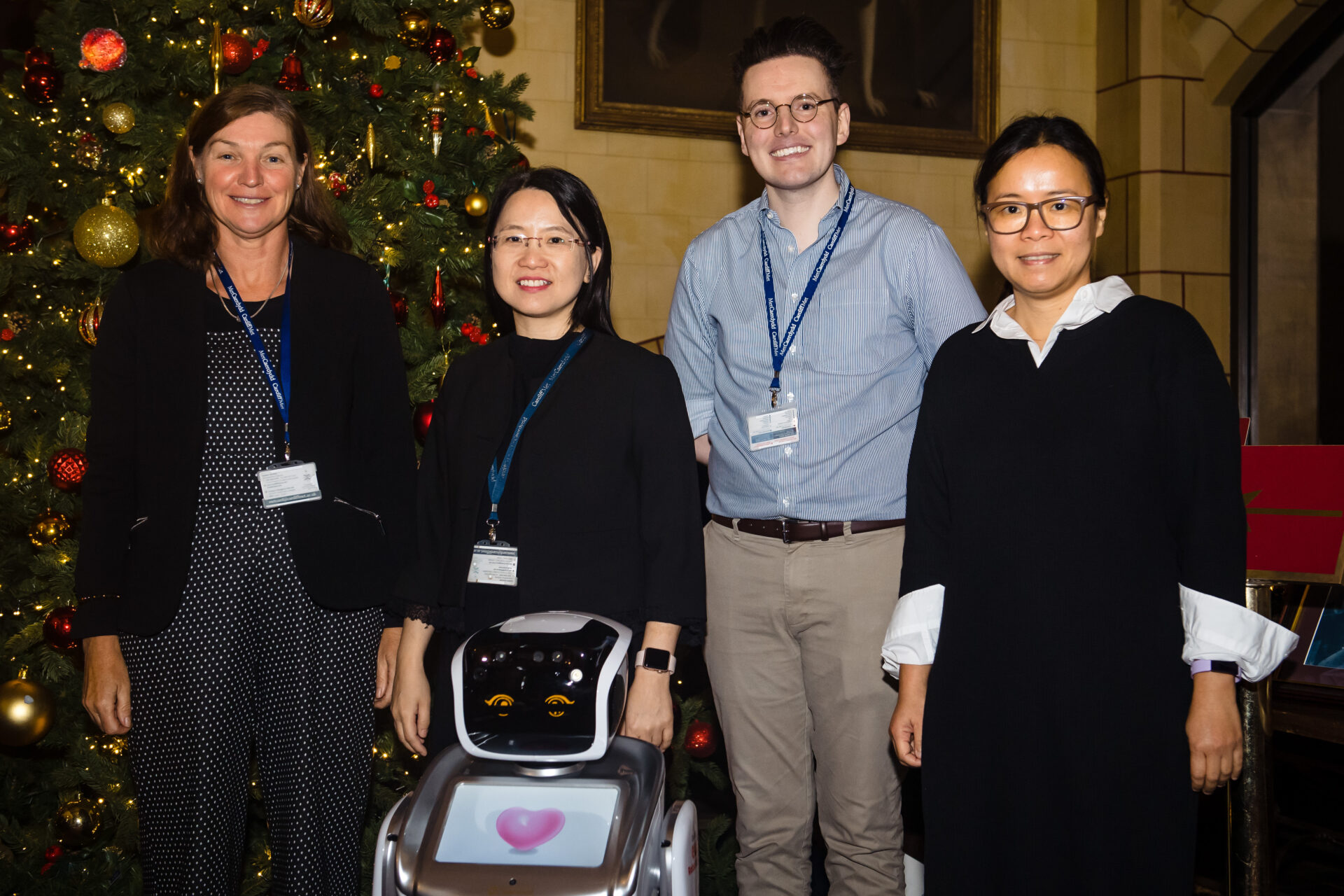
21th November 2022
Prof. Esyin’s journey with Cardiff Metropolitan University began while she and her husband were pursuing their PhDs in Cardiff. When her husband was rehired by his previous employer, he and Prof. Esyin decided to move their family to Wales permanently.
At the time, Cardiff Metropolitan University was seeking a senior lecturer, and they recognised something distinctive in Prof. Esyin’s resume: a blend of educational robotics, data science and applied research experience developed during her time lecturing at Monash University Malaysia.
The catalyst for the birth of EUREKA Robotics Centre came during the Covid-19 pandemic. Prof. Esyin’s mother, who lived alone in Kluang at the time, had suffered a serious fall. Worried for her health, Prof. Esyin rushed back to Malaysia and cared for her over the next three months.
With that period, came a question that would reshape her life’s trajectory.
“How can robotic AI help elderly people like my mum when we cannot be there 24/7?” Prof. Esyin asked herself.
From there, she was deeply inspired to upgrade the laboratory she founded in 2017, EUREKA Robotics Lab, to a centre in 2021.
“Before my mum’s accident, most of the work had remained within academic environments. The experience pushed me to bring robotics into real-world settings, particularly healthcare and education,” she explained.
After EUREKA Robotics Lab made the transition to a centre, it was recognised by the UK government as one of the 11 specialist centres in the UK to access cutting-edge Social Robotics facilities and long-term healthcare service robotics research and development (R&D).
Making a Tangible Impact on Malaysian Healthcare
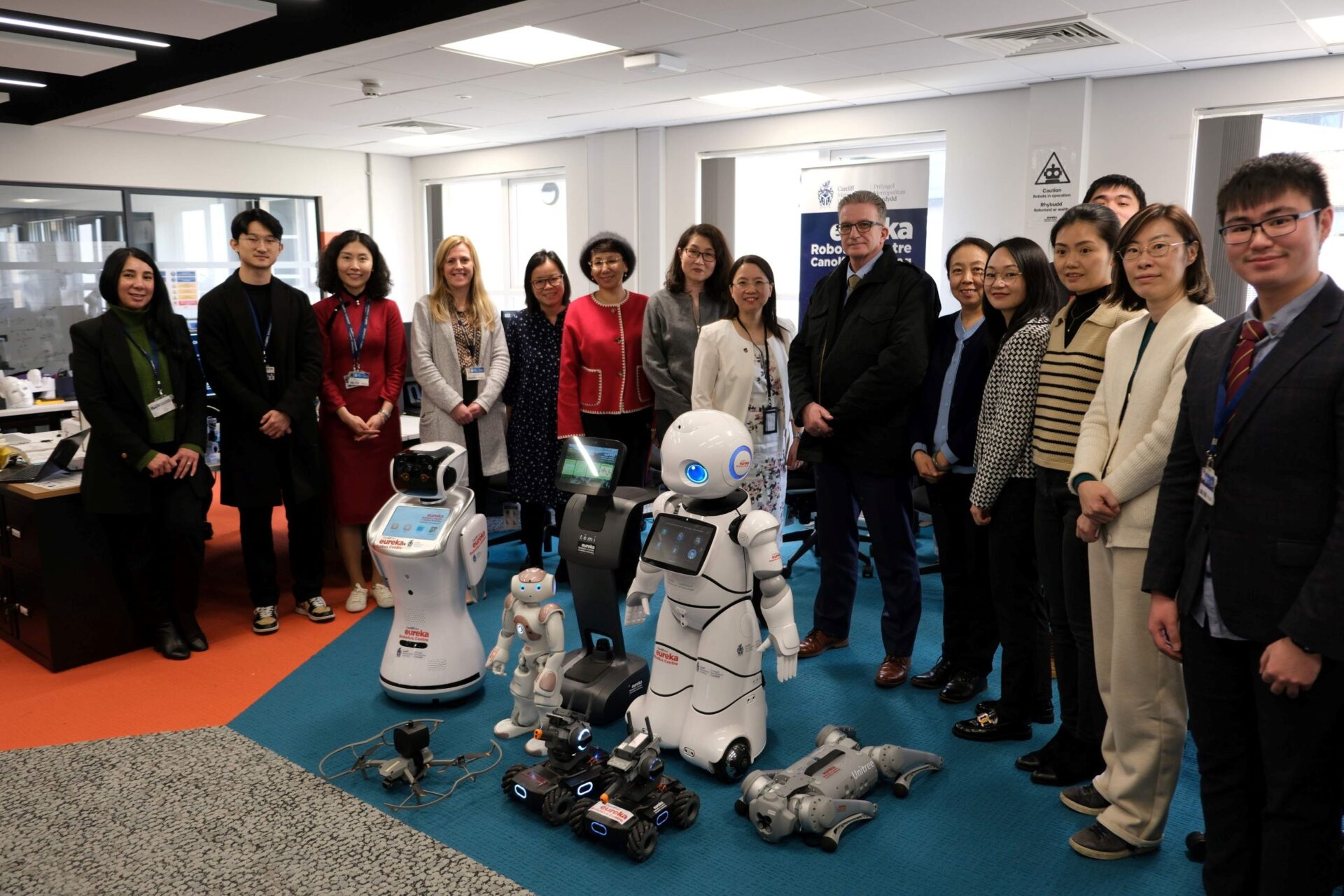
EUREKA’s impact stretches well beyond the UK, with Malaysia playing a central role in its international collaborations. The centre has co-authored research with Malaysian institutions like Universiti Malaya (UM), Universiti Teknologi Mara (UiTM), Universti Malaysia Pahang Al-Sultan Abdullah (UMPSA), Universiti Pendidikan Sultan Idris (UPSI), and Universiti Malaysia Kelantan (UMK). It has also introduced service robots into Malaysian hospitals and universities and established satellite and sister labs that mirror EUREKA’s facilities and training models.
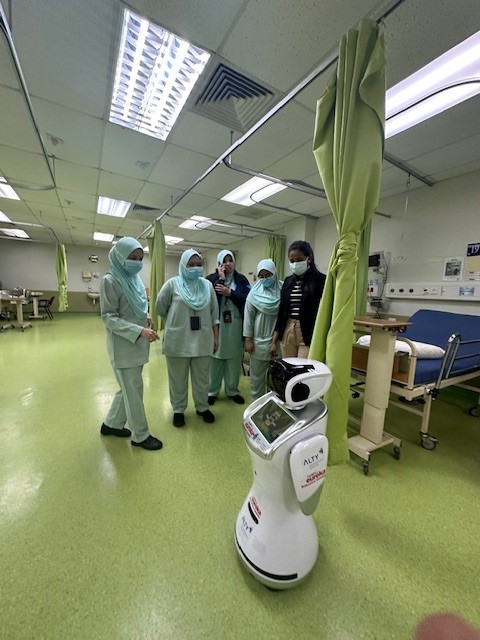
To date, more than 20 healthcare robots have been piloted into hospitals and care environments across the UK and Malaysia, including early trials at Pusat Perubatan Universiti Malaya (PPUM) and ALTY Orthopaedic Hospital.
Her work reflects the kind of cross-border collaboration MyHeart champions, where Malaysians abroad continue to contribute their expertise and meaningful impact to institutions back home.
“We are still in the early stages of bringing robots into real-world settings like hospitals, but I can see staff like nurses and doctors being welcoming of them because they really help in patients’ experience,” shared Prof. Esyin.
Mobility is another cornerstone of EUREKA’s collaborative relationship with Malaysia. Malaysian academics regularly travel to Wales for placements and workshops, while EUREKA teams support training and upskilling in Malaysia. Dual-PhD programmes, joint supervision, as well as student placement and summer schools with local universities are also in the works to further strengthen knowledge exchange.
Besides that, EUREKA does its part to empower women in Science, Technology, Engineering, and Mathematics (STEM) through an initiative called the Global PIE (Partnership in Equality, Empowerment, Education and Employability) for STEM Women, which brings female academics and students from countries like Malaysia, Indonesia and Pakistan to Wales.
Malaysian academics have led STEM workshops for underprivileged girls in Welsh communities, introducing robotics through culturally rich activities such as congkak-based mathematics and STEM Robots. Subsequently, she has won the Best UK-Malaysia Education Partnership with UiTM in 2024, awarded by British Malaysian Chamber of Commerce and British Council.
“It’s always a double win,” Prof. Esyin says. “Everyone learns, and everyone feels lifted.”
Key Areas of Growth for Robotics & AI in Malaysia
Having worked in robotics with Malaysian and Welsh institutions, Prof. Esyin observes strengths on each side.
“Robotics and AI are widely accepted among the Malaysian public. For instance, you can see many robots in kopitiams or mamak restaurants there,” she noted.
As for the UK, there is a deep consideration of potential ethical, legal, and social implications when it comes to the adoption of robotics and AI, something which Prof. Esyin genuinely believes Malaysia can draw from in its next phase of growth.
“We can learn more about what these considerations are in order to form and strengthen national policies that protect the people while still providing them with cutting-edge robotics-oriented healthcare,” she stated.
Beyond that, Prof. Esyin believes Malaysia’s robotics ecosystem has the potential to move towards greater diversity. “I hope to see more Malaysian companies emerge to grow the market for humanoid, social and educational robots locally. This would also make for a more competitive market, which means better pricing and accelerated improvement in quality.”
As such, it is vital for the government to invest in more companies like these as well as universities’ research efforts, she added.
Looking Beyond Gender & Academic Confines
For Malaysian students, especially women considering careers in robotics and AI, Prof. Esyin’s message is direct: do not see yourself as a minority.
“Gender does not limit your ability to do well,” she said. “You can do equally or even better.”
She also urges students to look beyond technical mastery. Robotics, she believes, demands ethical reflection, social awareness and long-term thinking. Most importantly, she encourages them to take knowledge beyond university walls.
“Study not for the mere sake of studying, scoring high marks or passing papers, but for the sake of applying your knowledge and research to address real-world problems, even if it’s a small thing. That is where you’ll find true impact and meaning,” said Prof. Esyin.
If you are a Malaysian professional keen to expand the impact of your organisation or cause, join MyHeart today and connect with like-minded Malaysians around the world who share your passion for the same causes.